How to Make International Friends (Without It Feeling Forced)
There’s something special about having friends who grew up in a completely different place. Different food, different humor, different ways of seeing the world. Conversations feel fresher, and you end up learning things you never would have otherwise.
But making those friendships can feel intimidating. How do you actually connect with people across borders without it turning awkward or one-sided?
Here’s what tends to work in real life.
Start with shared interests, not just “I want international friends”
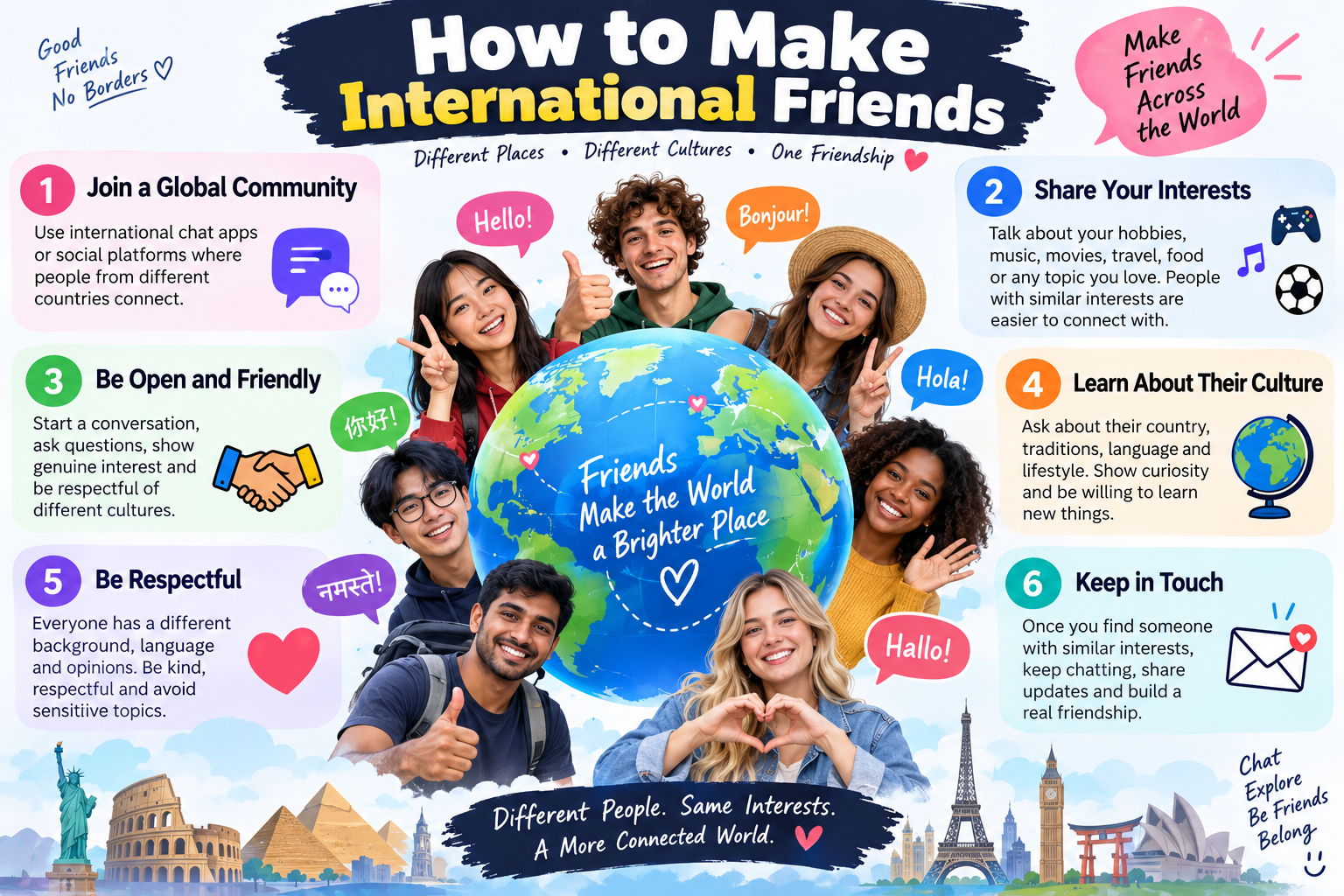
The strongest international friendships usually begin around something specific—not the vague goal of “meeting foreigners.” Look for communities built around things you already care about: photography, climbing, cooking, gaming, music, books, startups, or whatever lights you up.
When the common ground is clear, nationality becomes secondary. You’re just two people who both care about the same thing.
Use language exchange the smart way
Language exchange apps and platforms (like HelloTalk, Tandem, or conversation exchange sites) can work well if you treat them as actual conversations instead of pure practice sessions.
A few tips that help:
Be consistent with a few people rather than messaging dozens.
Share real parts of your life—photos of your city, what you cooked, a song you like—instead of only correcting grammar.
Move the conversation off the app once there’s natural chemistry (WhatsApp, Instagram, or voice notes work fine).
Many solid friendships start this way and later turn into real visits.
Join international or expat communities where you already live
You don’t always need to travel. Most cities have pockets of international people:
University international student groups
Expat meetups
Cultural centers and embassies that host events
Coworking spaces with a global crowd
Sports clubs, climbing gyms, or hobby groups that attract people from different countries
Showing up regularly is more important than being the most outgoing person in the room.
Travel with connection in mind (not just sightseeing)
When you travel, the people you meet often stick longer if you slow down. Stay in places that encourage conversation—hostels with common areas, smaller guesthouses, or longer Airbnb stays. Join a local class, a walking tour with a small group, or a volunteer day.
The best connections usually happen when you’re doing something together rather than just exchanging “where are you from?”
Be the one who follows up
A lot of potential friendships die after the first good conversation because no one reaches out again. A simple message a few days later—“Hey, I was thinking about what you said about that festival in your city”—goes further than most people realize.
International friendships often move slower at first because of time zones and distance. A little consistency from your side makes a big difference.
Accept that some connections will stay online (and that’s okay)
Not every international friendship needs to become an in-person visit. Some of the most meaningful ones stay digital for years—voice notes, shared playlists, random life updates. Those still count.
A few quiet truths
Cultural differences will sometimes create friction or misunderstandings. That’s normal. Curiosity and a bit of humor usually smooth things over better than trying to be perfectly correct all the time.
Also, not every attempt will click. That’s true of any friendship. Keep showing up in the spaces that interest you, and the right people tend to appear.
Making international friends isn’t about collecting passports or having the most “global” social circle. It’s about finding people whose company you genuinely enjoy—people who just happen to come from somewhere else.
Start with one shared interest or one platform. Be consistent. Follow up. The rest usually unfolds more naturally than you’d expect.
Online Friendship
4 min read
31 views
How to Make International Friends
Want friends from other countries but don’t know where to start? Here’s a practical, low-pressure guide to building real international friendships—online and in real life.
18
Sep